
How Women Build Revolutions in Private
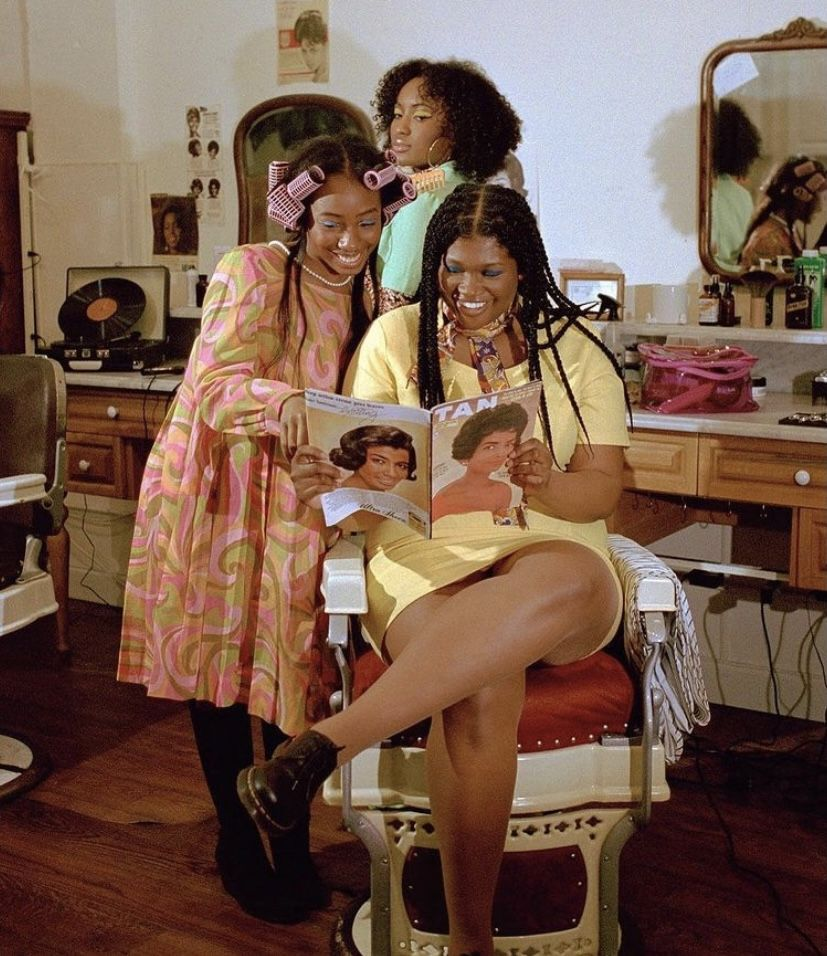
Women have always built revolutions in silence. The real work begins while we do our hair, ride the train, or sit at the kitchen table cooking and talking as something simmers on the stove. Women shape the future in these private gatherings where conversations become strategy, and decisions turn into activism. From beauty shops that fueled economic power and civil rights to private reproductive collectives that protected one another to mothers who turn shared grief into a force that challenges entire regimes, women build the first layer of every revolution long before the world notices.
Beauty Shops
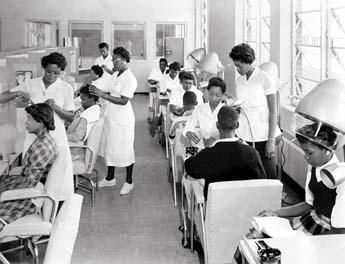
Long before the beauty shop became a political force, it became a place where Black women built economic freedom for themselves. The earliest wave of beauty culture, shaped by pioneers like Madam C. J. Walker, paved the way for financial independence at a time when most jobs available to Black women allowed no control, no dignity, and no safety. Owning a salon changed that. A woman could set her own hours, build her own clientele, and shape a space that answered to only her community. This economic autonomy mattered. It meant she could speak honestly about her life. It meant she could support other women without fear of a white employer listening at the door. The shop became a living room, a school, a financial hub, and a quiet stage for women to imagine a life with more agency than the outside world ever offered them.
By the time the Civil Rights era arrived, this foundation of economic and social independence had already turned beauty shops into powerful political rooms. Women came in for appointments and left with information that shaped the entire neighborhood. Conversations about school segregation, police harassment, and voter suppression traveled from chair to chair faster than any newspaper could print them. Many shops doubled as informal organizing centers. Women held citizenship classes in back rooms. They planned carpools for voter registration drives. They used appointment books to track who needed support and who had stepped into leadership. The salon operated as a newsroom, a classroom, and a command center disguised as a beauty ritual. What looked like everyday grooming was the making of political consciousness, built quietly by women who understood that freedom begins in the places where they gather, listen, and decide what they will no longer accept
"Call Jane”

Courtesy of Sundance Institute
The same instinct that made beauty shops safe havens also pushed another group of women to create a very different refuge when reproductive care became a matter of survival. The Jane Collective began in Chicago in 1965, when college student Heather Booth helped her friend’s sister find an abortion provider. She reached out to civil rights leader and surgeon T. R. M. Howard, who quietly agreed to perform the procedure. Word spread, and as more women asked for help, Booth kept connecting them. That informal act of compassion slowly grew into a discreet network that would later become known as The Jane Collective. Over time, the group expanded, trained one another, and became a lifeline in a city where hospitals routinely denied abortions to unmarried women, poor women, and Black women.
Most of the Jane volunteers were white and middle- or upper-class, and many of the early women they served reflected that privilege. Once travel became an option for wealthier women, Jane became essential to Black and low-income women in Chicago who could not afford a trip to New York. Jane provided counseling, transportation, procedure rooms, and aftercare, and they learned to perform the procedures themselves. They did this work in borrowed apartments and small living rooms. They trusted one another more than they trusted the institutions that had abandoned them. Over the years, they provided more than 11,000 abortions.
Women called a single phone line and were told to “call Jane,” a quiet phrase that carried both risk and relief. The collective operated calmly until 1972, when police raided one of their locations and arrested seven members. Each woman faced up to 110 years in prison for abortion-related charges. The case moved slowly through the courts until Roe v. Wade was decided in 1973, making abortion legal nationwide. The charges were dropped. The network dissolved because the world finally caught up to the care they had been providing in the shadows. What they built was not born from ideology; it was born from need. It grew from the understanding that if women waited for permission, they would die waiting.
Las Madres de Plaza de Mayo
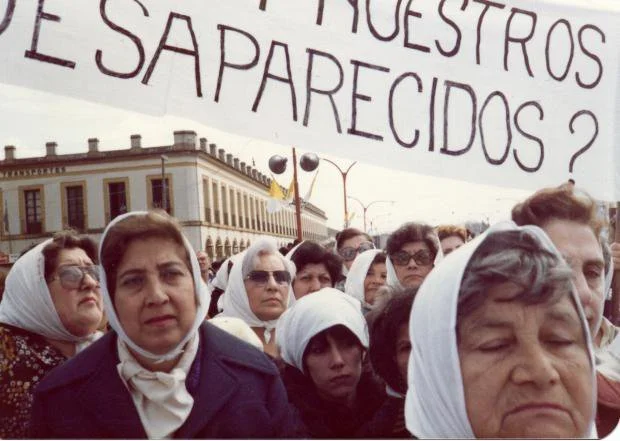
The same instinct that pushed women in Chicago to protect one another in private rooms also shaped a movement of mothers fighting a different kind of silence in Argentina. During the late 1970s, the country’s military dictatorship kidnapped, tortured, and disappeared an estimated 30,000 people. However, officials denied every abduction, and police stations turned grieving families away. Mothers searched alone at first, carrying their fear from office to office, hoping for information that never came. When they realized the silence was intentional, they found one another. They gathered in kitchens, compared stories, and wrote down the names of the missing because no institution would recognize that their children had been taken.
Their private grief soon moved into the public square. In 1977, fourteen mothers walked to the Plaza de Mayo in Buenos Aires and stood in front of the presidential palace holding photographs of their disappeared children. Public protests were banned, so they walked in circles to avoid arrest. They wore white scarves around their heads, cloth taken from children’s diapers, transformed into a symbol of resistance. Over time, the scarf became an international emblem for human rights struggles and for the mobilization of family members, especially women, who demand accountability in public spaces. What began as a simple act of identification became a global signifier of courage.
Week after week, every Thursday, they returned to the plaza. Their march became a ritual, and their ritual became a pressure that challenged a regime. Every year on March 24, they gather again in the same square to mark the beginning of the dictatorship’s bloodiest period and to remind the country of what was taken. They did not begin with a political agenda but with love and refusal. Their insistence on being seen reshaped Argentina’s memory and helped push the country toward democracy by forcing the truth of the disappearances into public view. Their revolution lived in quiet steps and steady presence, proof that even under the threat of death, women can turn silence into witness and witness into resistance.
Across every generation and every geography, women have carried the first sparks of revolution in the quietest places. A beauty shop chair, a borrowed apartment, a kitchen table where grief spreads. These are the rooms where women do the work the world does not see, shaping the care, strategy, and truth that movements later depend on. The freedom we recognize in public begins in these private spaces where women gather, listen, and choose courage long before anyone calls it history.
