
Loud Women Save Each Other
History shows that every step forward for women begins the moment someone speaks up.
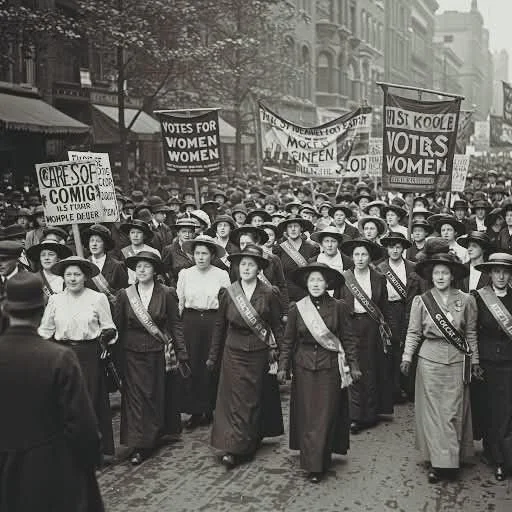
Women have carried the idea for generations that quiet promises safety, that if we behave, stay pleasant, and avoid friction, the world will reward us with protection. Yet the record shows the opposite. Every meaningful shift in women’s lives began when someone refused to accept silence as her only option and stepped into her voice, even when she knew the world might punish her for it.
You can see it in the fight for the vote. For decades, women lived under laws written entirely by men while being told their place was outside the political world. It took marches, public declarations, newspaper columns, mass meetings, picket lines, arrests, and hunger strikes to force the country to listen. The Nineteenth Amendment was not a gift, it was the result of women insisting, with relentless clarity, that their voices carried political weight. Nothing about that movement was quiet, polite, or passive. It was a loud, coordinated, inconvenient protest, and it changed the country.
The same is true for economic freedom. Until 1974, a bank could turn a woman away unless a man signed for her loan or credit card. Lenders justified this by saying women were unreliable or too emotional to manage money. The Equal Credit Opportunity Act only passed because women showed up to hearings, told their stories of being denied financial independence, and pushed lawmakers to confront the reality of their discrimination. Speaking out opened doors that silence never would have unlocked. Today’s financial autonomy exists because women made lawmakers uncomfortable with the truth.
Safety has followed this same pattern. For much of American history, domestic violence and sexual assault were treated as private matters or social misunderstandings, not crimes. The women who broke that silence transformed the landscape. Survivors stood before microphones, took public risks with their reputations, and described what had happened behind closed doors. Shelters opened because women told the truth, and hotlines formed. Laws changed because they demanded that harm done to women be seen and named instead of dismissed or softened.
Our grandmothers understood the core of this long before any legislation was made. When they say, “closed mouths do not get fed,” they are naming a survival truth. A woman who never names what she needs eventually accepts a life shaped by someone else’s comfort. A woman who learns to speak, even hesitantly, begins to reshape the ground she stands on. Her voice does not only nourish her. It becomes a signal that helps other women recognize what is possible.
This is how women save each other. One person decides she will not be dismissed at a doctor’s office, and someone watching realizes she can advocate for her own body too. Someone demands fair compensation for her work, and another woman realizes the number she was afraid to ask for might finally be on the table. Someone refuses to ignore a situation unfolding in front of her and steps in as a witness or protector, and that single intervention interrupts the script that harm depends on.
The status quo has never offered women safety without pressure. It never rebalanced itself out of goodwill. Progress arrived only after women created enough noise that ignoring them became impossible. Our rights and protections carry the fingerprints of women who risked being judged, ridiculed, or punished so that someone after them would live with more choices.
The truth is simple: silence has never saved us, but our voices have. Loud women save each other, not because loudness comes naturally, but because someone must start the chain reaction that breaks the old pattern. Once one woman speaks, others find their way to sound.